

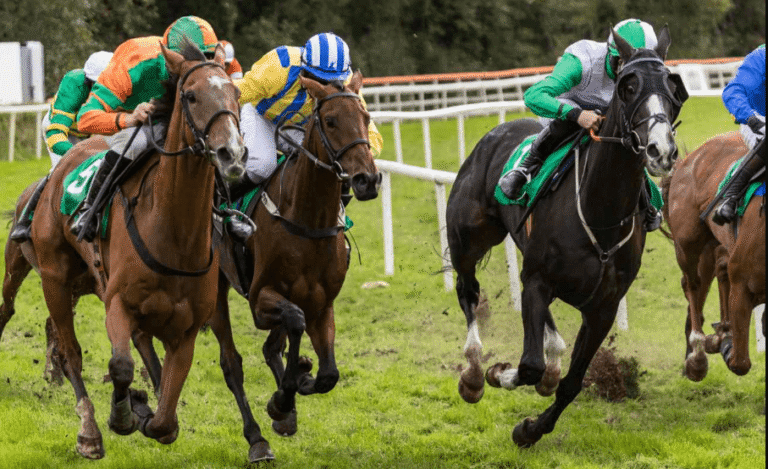
Horse racing presents a variety of race types, each offering distinct challenges and experiences. From the unyielding speed of flat racing to the intricate strategies required in steeplechase, the sport showcases diverse formats. Harness racing emphasizes the synergy between horse and driver, while endurance racing tests their stamina over long distances. Each format reveals unique aspects of the sport, inviting further exploration into what makes horse racing a multifaceted spectacle.
Flat Racing
Flat racing, the most prevalent form of horse racing, captivates audiences with its straightforward yet exhilarating spectacle.
With roots tracing back to ancient times, flat racing history reveals a rich tapestry of tradition and competition.
Effective flat racing strategies, such as analyzing track conditions and understanding horse form, are essential for bettors and enthusiasts alike, enhancing their engagement and appreciation for this thrilling sport.
Steeplechase
Steeplechase racing presents a dynamic blend of speed and endurance, distinguishing itself from other equestrian disciplines through its unique combination of flat racing and obstacles.
Success in steeplechase demands precise jumping techniques and strategic race strategies, as competitors navigate various jumps while maintaining optimal pace.
This thrilling form of racing captivates audiences, showcasing the horse’s agility and the rider’s tactical acumen in a true test of skill.
See also: Horse Racing: The Thrills of Watching Live Races
Harness Racing
Harness racing stands apart from its more traditional counterparts, emphasizing the speed and coordination of horses while pulling a sulky—a lightweight two-wheeled cart.
This unique sport primarily features gaited horses, known for their smooth and efficient strides.
Successful competitors rely on strategic race planning, optimizing their positioning and pacing to maximize performance.
Harness racing captures both excitement and skill, appealing to enthusiasts seeking thrilling competition.
Endurance Racing
While many equestrian sports focus on speed, endurance racing showcases the remarkable stamina and resilience of both horse and rider over long distances.
Successful endurance racing relies on meticulous endurance training and well-planned race strategies. Participants must balance pace and energy conservation, navigating varied terrains while maintaining the horse’s well-being.
This discipline ultimately celebrates the bond between horse and rider in pursuit of freedom and adventure.
Conclusion
In conclusion, exploring the diverse types of horse racing reveals a rich tapestry of competition, skill, and partnership. While some may argue that flat racing is the only true measure of speed, each race type offers unique challenges that demand different strengths from both horse and rider. Embracing this variety enhances not only one’s understanding of the sport but also the appreciation for the dedication and artistry involved in each race, making horse racing a multifaceted spectacle.